Material behavior confirmed
Cut quality, engraving contrast, heat effect, and extraction concerns are discussed for the actual materials in the workflow. The buyer can separate proven jobs from assumptions that still need testing.
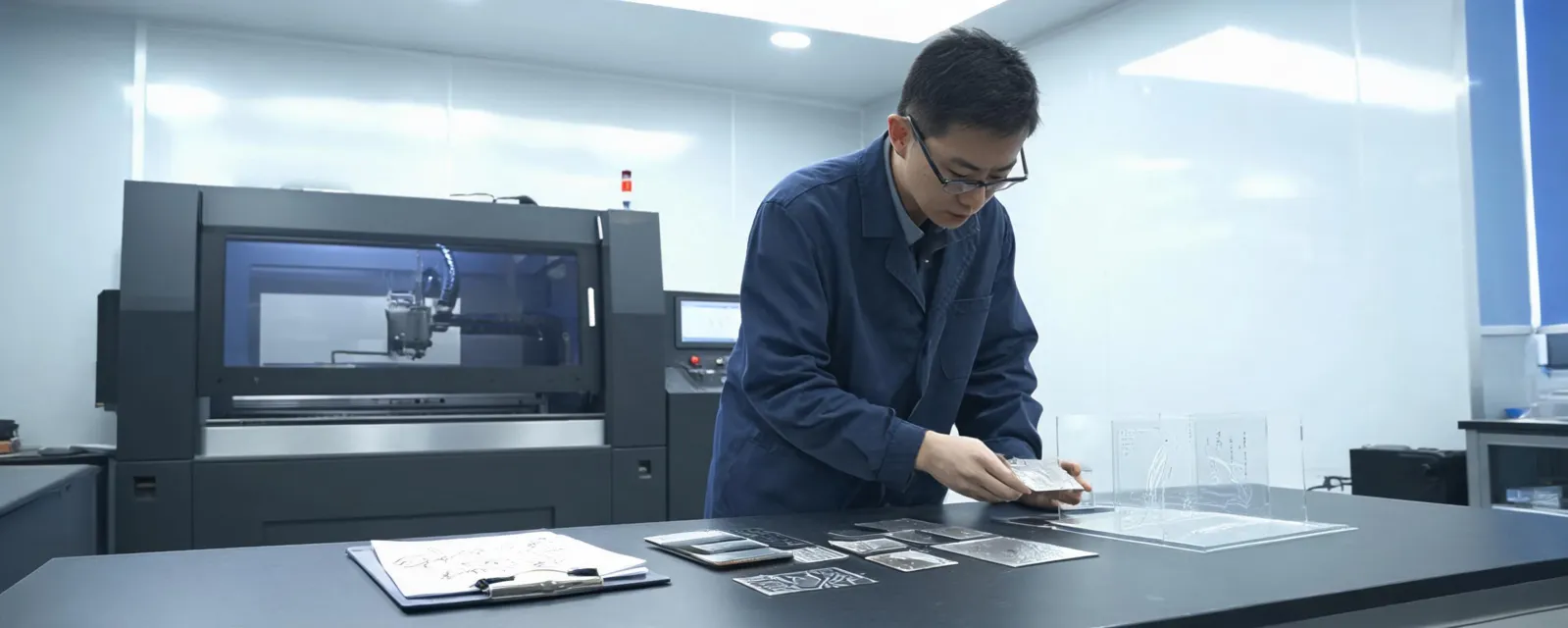
Trotec application planning turns a broad laser idea into a documented production application, step by step, so the buyer can see how each decision connects to real shop-floor conditions.
Trotec application planning gives teams a shared record of material behavior, process targets, operator needs, and support expectations. The purpose is simple: make sure the machine selected for cutting, engraving, or source matching is connected to real production conditions before the order is placed.
This matters because the wrong uncertainty can be expensive. A part that looks easy in a demonstration can become difficult when batch size changes, when a new operator takes over, or when another material enters the queue. Trotec treats readiness as a sequence of checks that can be discussed by engineering, operations, safety, and purchasing without forcing every stakeholder to become a laser physicist.
Cut quality, engraving contrast, heat effect, and extraction concerns are discussed for the actual materials in the workflow. The buyer can separate proven jobs from assumptions that still need testing.
Loading, file handoff, fixture use, safety checks, and cleaning responsibilities are named before commissioning. This prevents a strong machine from becoming an unclear daily process.
Training, consumables, service expectations, and application follow-up are written into the plan so the team knows how to keep improving after the first production run.
The readiness path is intentionally practical. It starts with a few facts about the work, moves into a source and platform comparison, and then becomes a launch plan. Each stage can be reviewed by the buyer team, which keeps responsibility clear and avoids the vague handoff that often slows capital equipment projects.
For a cutting application, the progress record may emphasize thickness range, edge finish, bed access, and gas handling. For an engraving application, it may emphasize contrast, fixture repeatability, mark durability, and operator settings. For fiber and CO2 source selection, it may compare material families and the service model needed for mixed production.
Send Trotec your material, part size, finish target, and expected volume. The response can help your team decide whether cutting, engraving, fiber, or CO2 equipment is the right next conversation.